

Everything you need to know about dental implant surgery with sedation or local anesthesia
Introduction
Fear of dental procedures is one of the most common reasons patients postpone tooth replacement. Many people worry about pain or discomfort, even though modern dentistry now makes it possible to undergo implant surgery in a completely pain‑free and stress‑free way. Comfort and safety are essential, and understanding the available options helps patients feel more confident. Implant placement under anesthesia is now a routine procedure that eliminates traumatic sensations. This guide explains how complete calm and comfort can be achieved throughout the entire treatment, especially for patients choosing dental implant surgery with sedation.
The Foundations of Pain‑Free Dentistry
Advances in implant dentistry have transformed both technology and the patient experience. he most frequent question is: “Is dental implant surgery painful?” The answer is no — and for many patients, choosing dental implant surgery with sedation provides an additional layer of comfort. The answer is no. Modern local anesthetics and advanced anesthesia techniques fully block pain. Every treatment begins with a detailed diagnostic evaluation, including CT scans and panoramic X‑rays.
The medications and methods used during the procedure ensure that oral tissues are completely numb. Innovative solutions — such as one‑phase implant placement — require fewer surgical steps than traditional methods, reducing postoperative recovery time and minimizing tension.
Local Anesthesia or Implantation Under General Anesthesia?
The choice is made together with the specialist during the consultation. Implant placement under local anesthesia is ideal for patients who do not experience significant anxiety related to dental tools or the clinical environment. Only the targeted jaw area is numbed, and the patient remains awake.
General anesthesia is recommended for patients with dental phobia, dental implant surgery under anesthesia offers a safe and fully relaxed experience. An external anesthesiology team ensures maximum safety throughout the surgery. The patient enters a deep, sleep‑like state and does not perceive sounds, pressure, or any part of the treatment. This option is especially beneficial for full‑mouth rehabilitation involving multiple implants.
How One‑Phase Implants Enhance Comfort
Comfort also includes how quickly the final result is achieved. One‑phase implants offer a major advantage: they can be used even in cases of bone deficiency, often eliminating the need for bone grafting. Because these implants are immediately loadable, patients receive a durable temporary restoration shortly after surgery.
This technology requires only one surgical procedure. There is no need for a second surgery to uncover the implants later, sparing the patient additional stress and discomfort. Fewer interventions and faster results contribute to a more positive overall experience.
Step‑by‑Step Guide to Implant Surgery Under Anesthesia
If the patient chooses anesthesia, the process follows a strict safety protocol:
– Personal consultation and CT evaluation
– Medical assessment by the anesthesiologist
– Intravenous sedation on the day of surgery
– Removal of teeth unsuitable for restoration
– Placement of the required number of one‑phase implants
– Fixation of a durable temporary restoration within one week, ensuring proper chewing function and aesthetics
What to Expect After a Pain‑Free Procedure
Although implant placement under anesthesia is completely unnoticeable for the patient, mild swelling or pressure may occur during the first days of healing. This is a natural response to surgery. Pain medication effectively eliminates any discomfort.
Patients who choose anesthesia often report a calmer recovery, as they have no memory of the surgical experience. The immediate stability of the temporary restoration provides psychological comfort and supports a smooth return to daily life. Follow‑up visits allow the implantologist to monitor bone integration and gum health.
Safety Guarantees During Implantation Under Anesthesia
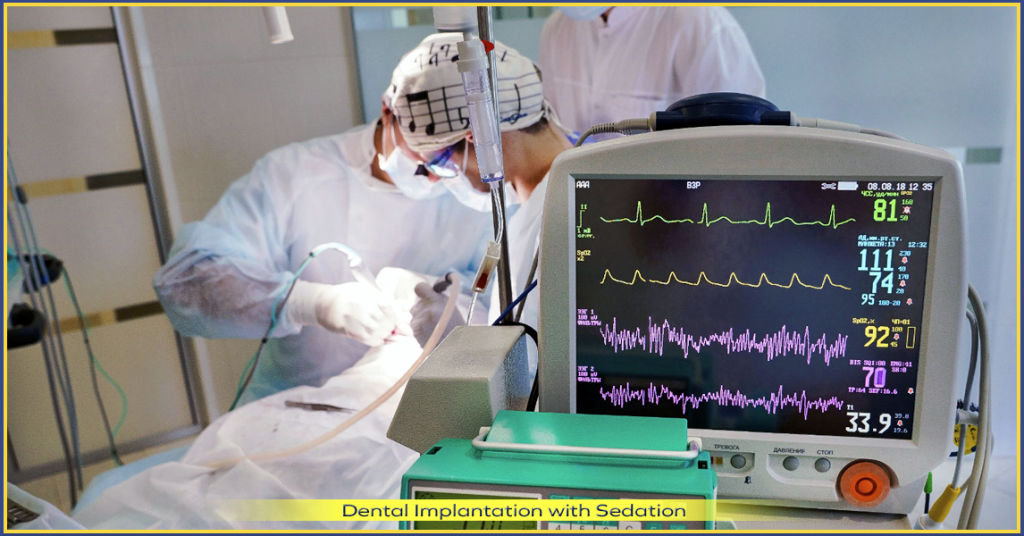
Many patients are concerned about anesthesia, but modern deep sedation and general anesthesia used in dentistry are extremely safe. A trained anesthesiologist continuously monitors vital signs throughout the procedure.
Our protocols meet the strictest professional standards. The anesthesia package includes all necessary monitoring and supervision, so patients do not need to worry about technical details. The goal is to ensure that treatment is not a frightening experience, but the beginning of functional and aesthetic restoration.
Frequently Asked Questions
Will I really feel nothing during the procedure if I choose anesthesia?
Yes. During implant surgery under anesthesia, the patient enters a deep sleep‑like state and does not hear instruments or feel pressure or pain. The anesthesiologist ensures continuous, safe sedation.
What are the risks of implant placement under anesthesia?
Risks are minimal because the procedure is preceded by a thorough medical evaluation. The anesthesiology team uses state‑of‑the‑art equipment to ensure safety throughout the entire process.
Can all types of implant treatments be performed under anesthesia?
Yes. Both one‑phase implants and fixed systems such as All‑on‑4 and All‑on‑6 can be performed under anesthesia, especially during longer procedures.
How long does it take to recover from anesthesia?
After surgery, the patient rests briefly in a recovery area and may go home with an escort once fully awake. Anesthetic medications leave the body quickly, so by the next day only natural surgical sensitivity may remain, which is easily managed with medication.
Is implant surgery under anesthesia more expensive than local anesthesia?
Yes. Anesthesia involves additional costs because it requires a dedicated anesthesiologist and assistant. However, many patients find the stress‑free experience and avoidance of trauma well worth the investment.
Summary of Pain‑Free Implant Options
Tooth replacement no longer needs to involve discomfort. Whether replacing a single tooth or undergoing full‑mouth rehabilitation, dental implant surgery under anesthesia allows patients to sleep through the procedure and wake up with restored function. One‑phase technology ensures fast results with fewer surgeries, even in cases of bone deficiency. If you are unsure whether implant placement would be painful in your situation, schedule a consultation to discuss your personalized options.
In our Articles section, you can find numerous articles on dental implants, single-stage and two-stage implant placement, as well as All-on-4 and All-on-6 technologies. We work with the most modern equipment and materials, backed by over 30 years of experience, 35,000 successful implant placements, and a 99.7% success rate. Get answers to your questions in our Fogpótlás Implantátummal | Dental Implants Facebook group.
iliDent Patient Coordinator © Copyright 2026
iliDent.com