

Essential guidelines and professional advice for long-term implant success
Introduction
The placement of titanium fixtures is the most advanced and durable method for replacing missing teeth, yet success does not conclude in the operating room. Dental implantation aftercare is a critical process that directly influences the osseointegration of the artificial root and the longevity of the final restoration. This period demands discipline, patience, and strict adherence to specialist instructions from the patient. Below, we provide a detailed guide on how to support your body’s healing in the weeks and months following the procedure.
Background
During implantation, the oral surgeon places a biocompatible material into the jawbone, which anchors through a biological process known as osseointegration. This process takes several months, during which the tissues surrounding the implant are extremely vulnerable to bacterial infections and mechanical trauma. The protocols applied during dental implantation aftercare aim to minimize these risk factors. Should a patient neglect prescribed hygiene and lifestyle rules, the risk of peri-implantitis (inflammation around the implant) increases, which is the most common cause of implant failure.
Priorities in the First 24 Hours Post-Surgery
The immediate period following the procedure focuses on wound closure and hemostasis. During this phase, the body initiates regeneration processes that must be supported externally.
— Hemostasis and Rest — Moderate pressure must be applied to the sterile gauze pad placed after surgery for at least 30 minutes. Physical rest is essential; an elevated heart rate can lead to secondary bleeding.
— Cooling and Edema Management — External cooling of the face (in 10–15 minute cycles) helps reduce tissue edema. Never apply ice directly to the skin; always use a textile protective layer.
— Post-Anesthesia Nutrition — Eating is only permitted after the anesthetic has completely worn off to avoid involuntary biting of the tongue or lips.
Dietary and Lifestyle Restrictions
In the first weeks of healing, certain habits and foods pose a direct threat to the surgical site. As part of dental implantation aftercare, the patient must consciously select their diet.
— Avoided Foods — Consumption of dairy products, eggs, and foods containing live cultures is not recommended for the first 3–5 days, as the bacteria they contain can be a source of infection. Small-seeded fruits and spicy seasonings should also be avoided.
— Smoking and Alcohol — Nicotine drastically impairs blood circulation and slows wound healing, while alcohol dilates blood vessels and may interfere with prescribed medications.
— Physical Activity — Sports, saunas, and lifting heavy weights should be suspended for at least a week to avoid wound dehiscence or the flare-up of inflammatory processes.
Specialized Oral Hygiene Protocol
Cleaning implants differs fundamentally from caring for natural teeth. Since there is no periodontal ligament to act as a natural barrier against bacteria, the role of hygiene is amplified.
— Gentle Cleaning — The surgical area should not be brushed directly with a toothbrush in the first few days, but the rest of the mouth must be kept clean as usual.
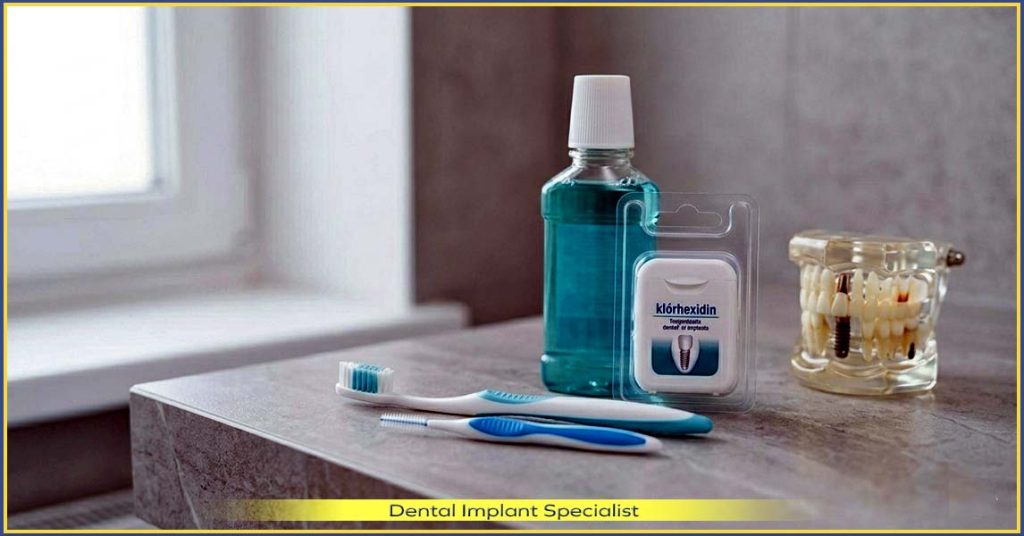
— Rinsing — Strong, alcohol-based mouthwashes and intense rinsing motions should be avoided. The disinfectant solution recommended by the doctor (e.g., preparations containing chlorhexidine) should only be gently moved around the mouth.
— Long-term Tool Usage — After healing, the use of implant-specific floss and soft-bristled brushes is recommended to prevent plaque buildup.
Healing Stages and the Importance of Follow-up
Dental implantation aftercare does not end with suture removal. The osseointegration process takes 3–6 months, depending on the type of implant and bone quality.
Suture Removal — Usually occurs 7–10 days after surgery, at which time the specialist checks the primary phase of wound healing. Temporary Restoration Care — If it is an immediate-load implant, cleaning and protecting the temporary denture is a priority task. — Regular Check-ups: Semi-annual clinical examinations and professional dental hygiene cleanings are essential for maintaining the lifespan of the implant.
When to Consult Your Surgeon Immediately?
While the risks of modern procedures are low, certain symptoms require immediate consultation.
1. If pain does not subside after 3–4 days but instead intensifies.
2. If swelling in the facial area begins to increase suddenly.
3. If you experience persistent numbness in the lips or jaw.
4. If the temporary restoration begins to move or emits an unpleasant odor.
5. If a high fever or persistent secondary bleeding occurs.
FAQ1.
1. How long does full recovery take after implantation? — Soft tissue healing takes 1–2 weeks, but osseointegration into the bone requires 3–6 months, depending on bone density.
2. Is it permissible to drink coffee after surgery? — Coffee consumption is not recommended in the first 24 hours due to its blood pressure-elevating effects; later, it is advised only lukewarm — and without milk.
3. Can I use an electric toothbrush on the implant area? In the first 2-3 weeks following surgery, a manual, soft-bristled brush is recommended. Later, an electric brush can be used, but excessive pressure on the neck of the implant must be avoided.
4. What happens if I accidentally bite on something hard during healing? — A healing implant may shift or be damaged within the bone. In such cases, it is worth having the stability checked at an unscheduled follow-up.
5.Is the dental implantation aftercare process painful? — The healing itself may involve a feeling of tension and mild pain, but this is well-managed with pain relievers. Persistent, sharp pain is not normal.
Summary
The success of dental implantation aftercare relies on cooperation between the patient and the attending physician. Precise oral hygiene, the cessation of smoking, and adherence to prescribed dietary restrictions minimize the chance of complications and guarantee the long-term stability of the placed fixture. Remember, the implant will become a part of your body; therefore, it requires the same—or even greater—attention than your natural teeth.
In our Articles section, you can find numerous articles on dental implants, single-stage and two-stage implant placement, as well as All-on-4 and All-on-6 technologies. We work with the most modern equipment and materials, backed by over 30 years of experience, 35,000 successful implant placements, and a 99.7% success rate. Get answers to your questions in our Fogpótlás Implantátummal | Dental Implants Facebook group.
iliDent Patient Coordinator © Copyright 2026
iliDent.com