
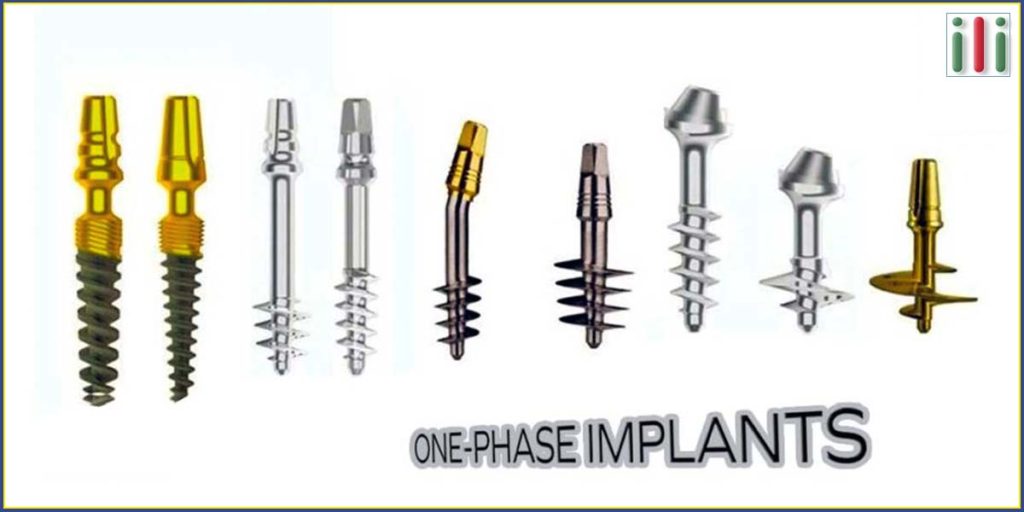
Have you heard of immediate loadable one-phase implant?
Introduction
Teeth play a far more important role in overall health than most people realize. They influence nutrition, digestion, speech, and even the condition of other organs. When teeth become damaged, infected, or unsuitable for prosthetic treatment, removal is often the only safe option. Once removed, the question becomes how to replace them in a way that restores full function and long‑term stability. One of the most effective modern solutions is the immediate loadable one-phase implant, a system that offers significant advantages over traditional two‑phase implants. This method allows for faster treatment, fewer surgical interventions, and a more predictable outcome for patients seeking complete oral rehabilitation.
The purpose of this article is to answer the most common questions about this implant family, explain how it differs from the two‑phase system, and clarify why so many patients choose it for full‑mouth restoration. Whether someone is considering a single implant or a complete denture supported by implants, understanding the principles behind the immediate loadable one‑phase implant helps them make an informed decision.
What is a dental implant?
A dental implant is an artificial tooth root made from a high‑purity titanium alloy. Titanium is biocompatible, meaning the body accepts it without allergic reactions or inflammation. Once placed into the jawbone, the implant integrates with the bone and becomes a stable foundation for a denture or crown. One of the greatest advantages of titanium implants is their durability. They do not decay, do not become inflamed, and can last a lifetime with proper care.
Two main implant families are widely used today. The first is the traditional two‑phase implant, which requires multiple surgical steps and a long healing period. The second is the immediate loadable one-phase implant, which allows for implant placement and denture fixation within days. This article focuses primarily on the one‑phase system, but understanding the differences between the two helps patients choose the most suitable option.
What does “one‑phase” mean?
The term “one‑phase” refers to the fact that the implant is placed in a single surgical session. Unlike two‑phase implants, which require two separate procedures with four to six months of healing between them, the one‑phase implant is inserted and prepared for loading in one visit. This is a major advantage for patients who want to minimize treatment time, discomfort, and the number of appointments.
Another important feature is that the one‑phase implant is made from a single piece of titanium. This design eliminates the connection point found in two‑phase implants, reducing the risk of bacterial infiltration and mechanical complications. Because of its shape and structure, the implant can be anchored not only in the alveolar bone but also in deeper, more stable regions of the jawbone. This flexibility is one of the reasons why the immediate loadable one-phase implant is suitable even for patients with moderate bone deficiency.
What does “immediate loadability” mean?
Immediate loadability means that the implant can support a denture shortly after placement. In practical terms, this allows the long‑term temporary denture to be attached within five to six working days. Patients do not have to wait months for healing before receiving a fixed denture. Instead, they leave the clinic with a stable, functional restoration that allows them to speak, eat soft foods, and enjoy a natural appearance right away.
The ability to load the implant immediately is made possible by its design, length, and the way it engages the bone. The implant achieves primary stability at the time of placement, which is essential for supporting a denture during the healing period. This feature is one of the main reasons why the immediate loadable one-phase implant has become a preferred choice for full‑mouth rehabilitation.
What additional advantages does the one‑phase implant offer?
One of the most significant advantages is its suitability for patients with bone deficiency. Because the implant can be anchored in deeper bone regions, it can often be placed without bone grafting. This is particularly beneficial for older adults, who frequently experience bone loss due to long‑term tooth absence. The ability to avoid bone grafting reduces cost, shortens treatment time, and minimizes surgical risk.
Another advantage is the reduced number of surgical interventions. With two‑phase implants, patients must undergo two surgeries: one for implant placement and another to expose the implant after healing. The one‑phase system eliminates the second surgery entirely. This makes the treatment more comfortable and less stressful, especially for patients who prefer a simpler, faster process.
The one‑phase implant also supports full‑arch rehabilitation efficiently. Because the implants can be placed at strategic angles and depths, they provide excellent stability for a complete denture. This makes the immediate loadable one-phase implant an ideal solution for patients seeking a fixed denture that restores full function and aesthetics.
What is the process of one‑phase implant‑based oral rehabilitation?
Oral rehabilitation with one‑phase implants takes place in two major stages. The first stage includes implant placement and the preparation of the long‑term temporary denture. The second stage involves creating the permanent denture once healing is complete.
First stage
— personal consultation with the implantologist,
— CT and panoramic x‑ray imaging,
— detailed examination of the oral cavity including bone and gum evaluation,
— consultation with the anesthesiologist before general anesthesia,
— removal of teeth unsuitable for restoration,
— preparation and placement of the required number of one‑phase implants,
— impressions for the long‑term temporary denture,
— fabrication of the temporary denture,
— fixation of the temporary denture on the implants,
— follow‑up examinations to monitor healing.
A healing period of approximately six months is recommended before the permanent denture is made. However, the long‑term temporary denture provides full function during this time.
Second stage
— personal consultation with the implantologist,
— panoramic x‑ray imaging to evaluate implant stability,
— thorough examination of the oral cavity,
— impressions for the permanent denture
— fabrication of the final porcelain denture,
— fixation of the permanent denture on the implants
— final control examinations
The permanent denture is fixed and not removable by the patient. It offers superior durability, comfort, and aesthetics.
How to choose the right professional for one‑phase implants
Not every dentist is an implantologist, and not every implantologist specializes in one‑phase implants. This method requires specific training, experience, and surgical skill. Patients should always choose an oral surgeon who has extensive experience with the immediate loadable one-phase implant system. Reviewing patient testimonials, before‑and‑after cases, and professional credentials helps ensure that the chosen specialist can perform the procedure safely and effectively.
Summary
The immediate loadable one-phase implant offers one of the most efficient and reliable solutions for replacing missing teeth. Its ability to support a denture within days, its suitability for patients with bone deficiency, and its single‑phase surgical approach make it a modern, patient‑friendly alternative to traditional two‑phase implants. By understanding how the system works and choosing an experienced implantologist, patients can enjoy a stable, natural‑looking denture and long‑term oral health.
In our Article section, there are many writings on the following topics: dentures with implants, dental implantation with one-phase and two-phase implants, and
All-On-4 & All-On-6 technology.
We work with state-of-the-art dental tools, materials, and technologies.
30 years of experience, more than 35,000 successful implant placements, and a 99.7% success rate!
iliDent Patient Coordinator © Copyright 2020
iliDent.com